
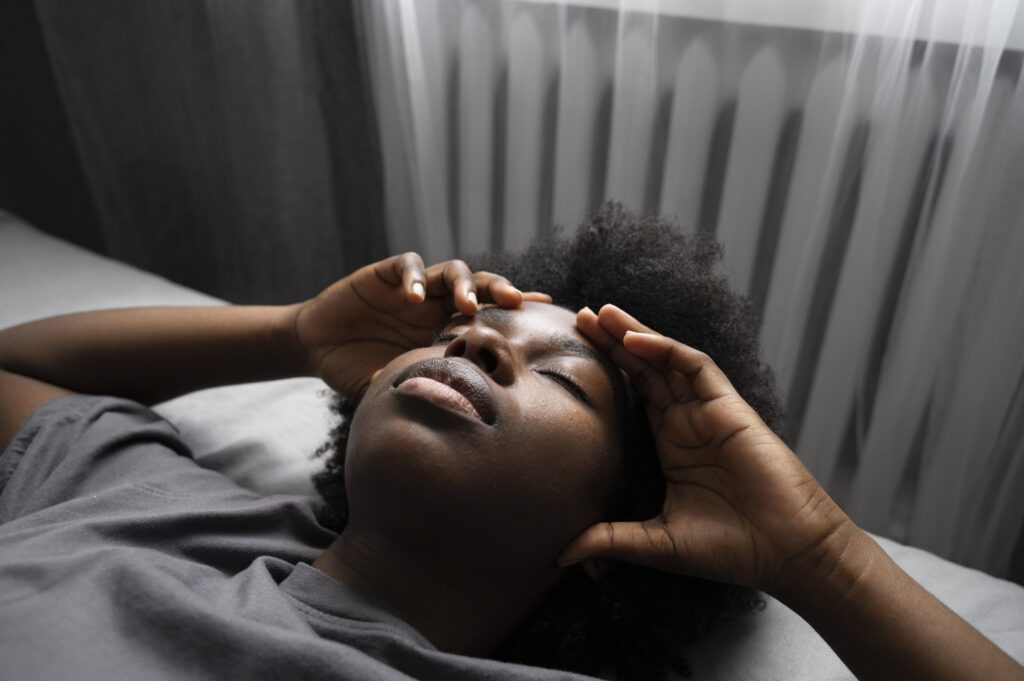
You’ve tried everything. Warm milk. Counting sheep. Cutting off caffeine by noon. Yet night after night,
you lie awake—mind racing, body exhausted but wired, watching the clock tick toward another depleted
tomorrow. Many people experience problems sleeping, including not getting enough sleep, not feeling
rested, and not sleeping well.¹ These problems can lead to difficulties functioning during the daytime and
have unpleasant effects on your work, social, and family life.¹
Sleep problems can be secondary to a medical illness such as sleep apnea, or a mental health condition
like depression.¹ But here’s what many people don’t realize: sleep issues can also be a sign of an
impending condition such as bipolar disorder.¹ In addition to affecting sleep itself, many medical and
mental health conditions can be worsened by sleep-related problems.¹
**More than one-half of insomnia cases are related to depression, anxiety, or psychological stress.**¹
Understanding this connection is essential for finding real, lasting solutions.
At The Horizon Behavioral Health in Worcester, we recognize that treating sleep problems often requires
addressing what lies beneath the surface. Our comprehensive approach considers the whole person—
body, mind, and the complex relationship between sleep and mental wellness.
Understanding Insomnia
One of the major sleep disorders that people face is insomnia.¹ Insomnia is an inability to get the amount
of sleep needed to function efficiently during the daytime.¹ Over one-third of Americans report difficulty
sleeping.¹
Types of Insomnia
Insomnia is caused by difficulty falling asleep, difficulty staying asleep, or waking up too early in the
morning.¹ Understanding which pattern you experience provides important clues about underlying causes:
Sleep-onset insomnia — Difficulty falling asleep at the beginning of the night. Racing thoughts, worry
about the next day, or physical tension keep sleep at bay. This pattern often accompanies anxiety
disorders.²
Sleep-maintenance insomnia — Waking during the night and struggling to return to sleep. Some people
wake multiple times, never achieving deep, restorative sleep.Early morning awakening — Waking significantly earlier than intended and being unable to fall back
asleep. This pattern is particularly associated with depression.¹ ²
When Insomnia Requires Professional Help
Insomnia is rarely an isolated medical or mental illness but rather a symptom of another illness to be
investigated by a person and their medical doctors.¹ In other people, insomnia can be a result of a person’s
lifestyle or work schedule.¹
Short-term insomnia is very common and has many causes such as stress, travel, or other life events.¹ It
can generally be relieved by simple sleep hygiene interventions such as exercise, a hot bath, warm milk,
or changing your bedroom environment.¹
Long-term insomnia lasts for more than three weeks and should be investigated by a physician with a
potential referral to a sleep disorder specialist, which includes psychiatrists, neurologists, and
pulmonologists who have expertise in sleep disorders.¹
Sometimes insomnia or other sleep problems can be caused by sleep apnea, which is a separate medical
condition that affects a person’s ability to breathe while sleeping.¹ A doctor or sleep specialist can
diagnose sleep apnea and provide treatment to improve sleep.¹
The Bidirectional Relationship: Sleep and Mental Health
The relationship between sleep and mental health flows both directions. Mental health conditions disrupt
sleep, and poor sleep worsens mental health conditions. Often the qualities of a person’s insomnia and
their other symptoms can be helpful in determining the role of a mental health condition in a person’s
inability to sleep.¹
How Mental Health Conditions Affect Sleep
Depression — Early morning wakefulness can be a sign of depression, along with low energy, inability
to concentrate, sadness, and a change in appetite or weight.¹ Some people with depression sleep
excessively rather than too little.²
Mania and Bipolar Disorder — A sudden dramatic decrease in sleep which is accompanied by increase
in energy, or the lack of need for sleep may be a sign of mania.¹ This sleep change is actually a warning
sign that shouldn’t be ignored.
Anxiety Disorders — Many anxiety disorders are associated with difficulties sleeping.¹ The worried
mind that characterizes anxiety doesn’t switch off at bedtime. People lie awake anticipating problems or
feeling physically keyed up despite exhaustion.²
OCD — Obsessive-compulsive disorder (OCD) is frequently associated with poor sleep.¹ Bedtime rituals
may delay sleep, and racing obsessive thoughts can prevent rest.
Panic Disorder — Panic attacks during sleep may suggest a panic disorder.¹ Waking suddenly with
intense fear, racing heart, and physical symptoms can severely disrupt sleep quality.
PTSD — Poor sleep resulting from nightmares may be associated with posttraumatic stress disorder
(PTSD).¹ Many trauma survivors dread bedtime, knowing sleep will bring disturbing dreams.
Schizophrenia and ADHD — Treatment of sleep disorders has also been studied in relationship to
schizophrenia, ADHD, and other mental health conditions.¹How Poor Sleep Worsens Mental Health
Poor sleep has been shown to significantly worsen the symptoms of many mental health issues.¹ Severe
sleep problems can decrease the effectiveness of certain treatments.¹
All of the scientific data shows the connection between medical and mental illnesses: good sleep is
necessary for recovery—or prevention—in both types of conditions.¹
Sleep deprivation impairs emotional regulation, making people more reactive, irritable, and vulnerable to
negative emotions.² It compromises the brain’s ability to process and cope with stress. Research
consistently shows that improving sleep improves mental health outcomes.²
The Role of Substances in Sleep Disturbance
Substance abuse can also cause problems with sleep.¹ Understanding how various substances affect sleep
is crucial for recovery.
Alcohol and Sleep
While alcohol is sedating in limited quantities, intoxication with alcohol can make you wake up numerous
times in the night and disturbs your sleep patterns.¹ The “sleep” obtained after drinking is less restorative
than natural sleep, and regular alcohol use can create dependence where people feel unable to sleep
without drinking.²
Other Substances
Drugs such as LSD, ecstasy, Molly, and marijuana are also associated with disturbances in sleep.¹
Stimulants including caffeine, nicotine, cocaine, and amphetamines predictably disrupt sleep by
activating the nervous system.²
Sedative Medications
Some sedative medications may cause sleepiness during intoxication but can disturb sleep and cause
serious problems sleeping in people who are addicted to or withdrawing from these medications.¹
Prescription sleep medications can lead to tolerance and rebound insomnia when stopped.²
Comprehensive Treatment for Sleep Disturbances
The first-line treatment for insomnia is good sleeping habits and taking care of any underlying conditions
that may be causing the problems with sleeping.¹ But when these are not enough, other treatment options
can be considered.¹
Treating Underlying Conditions
When sleep problems stem from mental health conditions, treating those conditions often improves sleep
significantly. Effective depression treatment frequently restores healthy sleep patterns. Managing anxiety
reduces the hyperarousal that prevents sleep. Stabilizing bipolar disorder regulates sleep-wake cycles.²
Cognitive Behavioral Therapy for Insomnia (CBT-I)
Cognitive behavioral therapy is an evidence-based treatment option for insomnia.¹ ³ CBT-I is considered
the gold-standard treatment for chronic insomnia, often more effective than medication with longer-
lasting results.³CBT-I components include:³
Sleep restriction — Limiting time in bed to match actual sleep time, building sleep pressure
Stimulus control — Rebuilding the association between bed and sleep
Cognitive restructuring — Addressing anxious thoughts about sleep
Sleep hygiene education — Environmental and behavioral factors supporting healthy sleep
Relaxation training — Techniques to reduce physical and mental arousal
Medication When Appropriate
Medication is one treatment option that can be considered.¹ While medication isn’t the first-line treatment
for chronic insomnia, it can play a role in comprehensive care. Short-term use of sleep medications may
provide relief while behavioral changes take effect.²
Relaxation Techniques
Relaxation techniques can be effective for managing sleep problems.¹ Progressive muscle relaxation, deep
breathing, and meditation can reduce the physical and mental arousal that interferes with sleep.
Exercise
Exercise is another treatment option that supports healthy sleep.¹ Regular physical activity improves sleep
quality, though vigorous exercise close to bedtime can be stimulating.²
Light Therapy
Light therapy, which uses a light box to expose a person to full spectrum light and regulate the hormone
melatonin, can be helpful for certain sleep issues.¹ It’s particularly effective for circadian rhythm
problems and seasonal patterns.²
Building Better Sleep Habits
While chronic insomnia requires professional treatment, good sleep practices support everyone’s rest:²
Sleep Environment
Your bedroom should be cool, dark, and quiet. Reserve your bed for sleep—not work, not screens, not
worry.
Consistent Schedule
The body’s circadian rhythm thrives on consistency. Going to bed and waking at the same times daily—
including weekends—reinforces healthy sleep patterns.
Wind-Down Routine
A consistent pre-sleep routine signals your body that sleep is approaching. Dim lights, take a warm bath,
read (not screens), or practice relaxation exercises.
Manage Stimulants and Screens
Caffeine has a longer half-life than most people realize. Electronic screens emit blue light that suppressesmelatonin; avoid screens for at least an hour before bed.
Frequently Asked Questions About Sleep and Mental Health
How do I know if my sleep problems need professional help?
Long-term insomnia lasting more than three weeks should be investigated by a physician.¹ If sleep
difficulties significantly affect daytime functioning, or are accompanied by mood changes, anxiety, or
other concerning symptoms, professional evaluation is warranted.
Can fixing my sleep cure my depression or anxiety?
Improving sleep alone may not fully resolve depression or anxiety, but it’s often an essential component
of recovery. Sleep and mental health are deeply intertwined; addressing both together produces better
outcomes than focusing on either alone.¹ ²
Are sleeping pills safe for long-term use?
Some sedative medications can disturb sleep and cause serious problems in people who become addicted
to or withdraw from them.¹ Most sleep medications are intended for short-term use only. CBT-I produces
more lasting results without these risks.³
Why do I feel more anxious or depressed after a bad night’s sleep?
Poor sleep has been shown to significantly worsen the symptoms of many mental health issues.¹ Sleep
deprivation directly impairs the brain’s ability to regulate emotions, making negative emotions more
intense and harder to manage.²
Can children and teens have sleep disorders related to mental health?
Yes. Sleep problems in children and adolescents often accompany anxiety, depression, ADHD, and other
conditions.² Sleep problems in young people warrant professional attention, especially when accompanied
by mood or behavioral changes.
Rest Is Within Reach
Chronic sleep problems are exhausting in every sense—physically, mentally, emotionally. The foggy
days, the dreaded nights, the frustration of lying awake while the world sleeps. But sleep disturbance is
treatable, especially when its connection to mental health is understood and addressed.
At The Horizon Behavioral Health in Worcester, MA, we don’t just treat symptoms—we look beneath the
surface to understand what’s really disrupting your rest. Whether your sleep problems stem from
depression, anxiety, PTSD, or other conditions, our comprehensive approach addresses the whole picture.
You deserve nights of genuine rest and days of clear-headed energy. Let us help you find your way back
to healthy sleep.
Ready to take the first step?
Contact The Horizon Behavioral Health today to schedule your consultation. Better sleep—and better mental health—starts here.
Sleep and mental health are deeply connected—more than half of chronic insomnia cases relate to
depression, anxiety, or stress. Sleep issues can also signal emerging conditions like bipolar disorder.
Whether you’re struggling to fall asleep, stay asleep, or wake feeling rested, our comprehensive approach
addresses the root causes of sleep disturbance with evidence-based treatments including CBT for
insomnia.
[Read More →]
References
1. 2. 3. 4. 5. National Alliance on Mental Illness. (2015). Sleep Disorders Fact Sheet. NAMI.
https://www.nami.org/About-Mental-Illness/Mental-Health-Conditions/Sleep-Disorders
National Institute of Mental Health. (2024). Sleep and Mental Health. NIMH.
https://www.nimh.nih.gov/health/publications/sleep-and-mental-health
American Academy of Sleep Medicine. (2024). Cognitive Behavioral Therapy for Insomnia.
AASM. https://sleepeducation.org/sleep-disorders/insomnia/treatment/
Sleep Foundation. (2024). Mental Health and Sleep. Sleep Foundation.
Mayo Clinic. (2024). Insomnia: Diagnosis and Treatment. Mayo Clinic.
https://www.mayoclinic.org/diseases-conditions/insomnia/diagnosis-treatment/drc-20355173
Word Count: ~2,000 words Last Updated: January 2025 Medical Review: Content based on current
clinical guidelines and peer-reviewed sources