
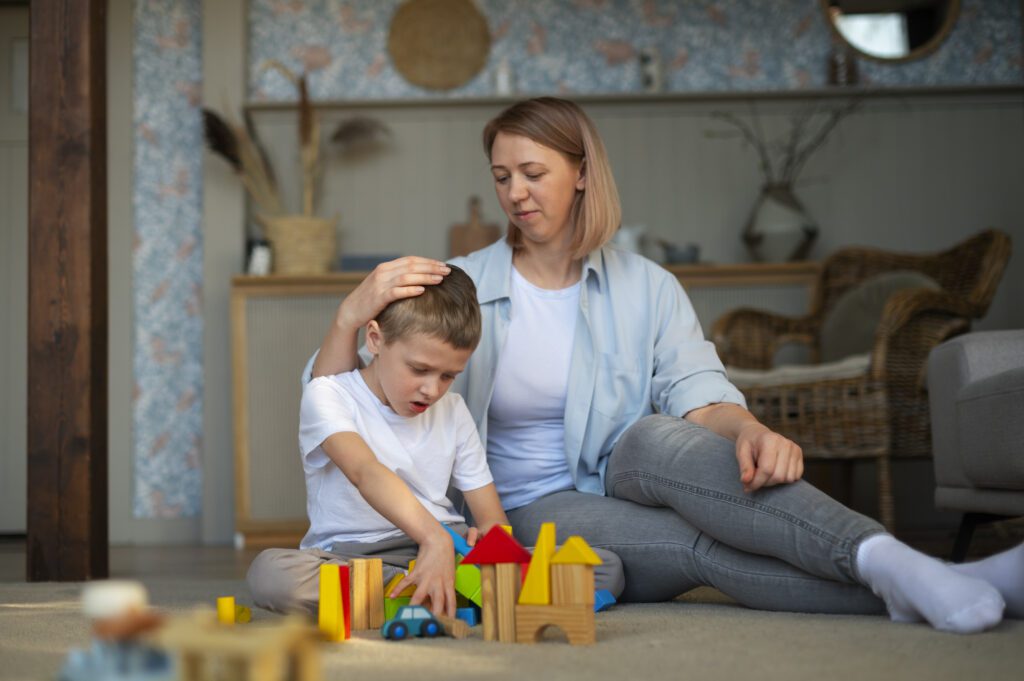
Autism Spectrum Disorder (ASD) is a developmental disorder that affects a person’s ability to socialize
and communicate with others.¹ ASD can also result in restricted, repetitive patterns of behavior, interests,
or activities.¹ But autism is far more than a list of diagnostic criteria—it’s a neurological difference that
shapes how a person perceives, processes, and interacts with the world around them.
The term “spectrum” is key to understanding autism. It refers to the wide range of symptoms, skills, and
levels of impairment or disability that people with ASD can have.¹ Some people are mildly impaired by
their symptoms, while others are severely disabled.¹ There is no single way to be autistic—this enormous
variability means that understanding and supporting someone with autism requires seeing them as an
individual first.
The prevalence rate for ASD has increased significantly in recent years. According to the CDC,
approximately 1 in 36 children has been identified with Autism Spectrum Disorder.² While autism is
diagnosed more frequently in boys—who are four times more likely than girls to develop ASD—growing
recognition that autism often presents differently in females means more women are now receiving
diagnoses that were previously missed.¹ ² ASD crosses racial, ethnic, and social backgrounds equally.¹
At The Horizon Behavioral Health in Worcester, we provide comprehensive autism services for
individuals and families across Central Massachusetts. Whether you’re seeking an initial evaluation,
therapeutic support, or help navigating the complex landscape of autism services, our compassionate team
is here to guide you.
How Autism Affects Development and Daily Life
Symptoms of ASD start to appear during the first three years of life.¹ Typically developing infants are
social by nature—they gaze at faces, turn toward voices, grasp a finger, and even smile by 2-3 months of
age.¹ By contrast, most children who develop autism have difficulty engaging in the give-and-take of
everyday human interactions.¹
Autism influences two primary areas of functioning: social communication and restricted or repetitive
behaviors.¹ ² Understanding how these core features manifest helps families recognize autism and guides
effective support strategies.
Social Communication Differences
From the earliest months of life, social development in autism often follows a different trajectory.Common symptoms related to social communication include:¹ ²
Difficulty making eye contact
Delay in language development
Difficulty interpreting facial expressions
Problems with expressing emotions
Difficulty interacting with peers
Absence of pretend play
Many autistic individuals describe feeling like they’re constantly translating between their internal
experience and the social expectations of the neurotypical world. This effort can be exhausting and
contributes to the high rates of anxiety seen in the autism community.³
It’s important to recognize that communication differences don’t mean lack of desire for connection.
Many autistic people deeply want relationships but struggle with the unwritten social rules that others
navigate intuitively.
Restricted Interests and Repetitive Behaviors
The second core feature of autism involves patterns of behavior, interests, and activities that may appear
rigid, repetitive, or intensely focused. Symptoms include:¹ ²
Repetitive and routine behaviors
Fixation on parts of objects
Sensory problems (over- or under-sensitivity to sounds, lights, textures)
Self-harm behavior in some cases
Sleep problems
Special interests often develop—deep, passionate engagement with specific topics. These interests may
seem unusually intense compared to typical hobbies, but they often provide joy, comfort, and a sense of
competence.³
Repetitive behaviors can include physical movements like hand-flapping, rocking, or spinning (often
called “stimming”), as well as verbal repetition or ritualized routines. These behaviors often serve
important self-regulatory functions—helping manage sensory input or cope with anxiety.³
Need for sameness and difficulty with transitions affects many autistic individuals. Unexpected changes
to routines can cause significant distress.
Understanding the Spectrum
Symptoms of ASD fall on a continuum. This means that the learning, thinking, and problem-solving
abilities of children with ASD can range from gifted to severely challenged.¹ Some children with ASD
need a lot of help in their daily lives, while others need less.¹ With a thorough evaluation, doctors can
make a diagnosis to help find the best treatment plan.¹What Causes Autism?
Scientists have not discovered a single cause of ASD. They believe several factors may contribute to this
developmental disorder:¹ ² ³
Genetic Factors
If one child in a family has ASD, another sibling is more likely to develop it too.¹ Likewise, identical
twins are highly likely to both develop ASD if one has developed it.¹ Relatives of children with autism
show minor signs of communication difficulties.¹ Scans reveal that people on the autism spectrum have
certain differences in brain structure and chemical function.¹
Research suggests that autism is approximately 80% heritable, making genetics the strongest known risk
factor.³
Environmental Factors
Scientists are currently researching multiple environmental factors that are thought to play a role in
contributing to ASD.¹ Many prenatal factors may contribute to a child’s development, such as a mother’s
health.¹ Other postnatal factors may affect development as well.¹
Risk factors that have been studied include advanced parental age, certain pregnancy complications, and
very premature birth.³
What Doesn’t Cause Autism
**Despite many claims that have been highlighted by the media, strong evidence has been shown that
vaccines do not cause ASD.**¹ This myth, based on a fraudulent study that has been thoroughly debunked
and retracted, continues to circulate despite overwhelming scientific evidence to the contrary.² ³
Autism is also not caused by bad parenting, too much screen time, or lack of affection. These harmful
myths cause unnecessary guilt for families already navigating significant challenges.
The Diagnostic Process
Evaluation for Children
Diagnosing ASD is often a two-stage process.¹ The first stage involves general developmental screening
during well-child checkups with a pediatrician.¹ Children who show some developmental problems are
referred for additional evaluation.¹
The second stage involves a thorough evaluation by a team of doctors and other health professionals with
a wide range of specialties.¹ At this stage, a child may be diagnosed as having ASD or another
developmental disorder.¹ Typically, children with ASD can be reliably diagnosed by age 2, though some
may not be diagnosed until they are older.¹
At The Horizon Behavioral Health, our evaluations are thorough yet family-centered. We understand the
anxiety that often accompanies the diagnostic process and strive to make families feel supported
throughout.
The Growing Recognition of Adult Autism
One of the most significant shifts in autism understanding involves recognition that many adults—particularly women and those without intellectual disability—grew up without diagnosis. These
individuals often spent decades knowing they were somehow different without understanding why.
Receiving a diagnosis in adulthood can be profoundly validating. Understanding oneself through the lens
of autism often reframes a lifetime of experiences and opens doors to self-acceptance, community, and
more effective support strategies.
At The Horizon Behavioral Health, we provide autism evaluations for adults as well as children,
recognizing that diagnosis at any age can be transformative.
Autism in Women and Girls
Autism has historically been underdiagnosed in females, partly because early research focused primarily
on males and partly because autism often presents differently in girls and women.³
Females on the spectrum may be more likely to mask their difficulties, consciously studying and
mimicking social behavior to fit in. They may develop intense interests in topics that seem more socially
typical and thus attract less attention. Their struggles may be internalized rather than externalized,
manifesting as anxiety or depression rather than disruptive behavior.
Comprehensive Support and Treatment
Many treatment plans exist for ASD, and each is tailored to every person’s unique needs.¹ These can
consist of medications, therapy, or both.¹ Many therapists work closely with ASD children and adults,
using a variety of therapies to help increase their social and communication skills.¹
ASD is treated and managed in several ways:¹ ² ⁴
Education and Development
Specialized classes and skills training provide structured learning environments.¹ Time with therapists and
other specialists helps build communication, social, and daily living skills.¹ Educational approaches
should be tailored to the individual’s learning style and needs.
Behavioral Treatments
Applied Behavior Analysis (ABA) is one of the most widely used and researched interventions for
autism.¹ ⁴ Modern ABA focuses on building skills, reducing challenging behaviors by addressing their
underlying causes, and improving quality of life. Ethical ABA providers prioritize the individual’s
wellbeing.
Speech and Language Therapy
Speech therapy addresses communication challenges, whether helping nonverbal individuals develop
alternative communication methods or supporting verbal individuals with pragmatic language skills.⁴
Occupational Therapy
Occupational therapy helps with sensory processing, motor skills, and daily living activities.
Understanding and accommodating sensory needs often dramatically improves quality of life.⁴
Medication
There is no medication that treats autism itself, but medication can effectively address co-occurringsymptoms when combined with therapy.¹ Many autistic individuals benefit from medication for anxiety,
depression, ADHD, sleep problems, or other challenges.⁴
Complementary and Alternative Approaches
Complementary and alternative medicine (CAM), such as supplements and changes in diet, are explored
by some families.¹ It’s important to discuss any complementary approaches with healthcare providers and
to be wary of unproven treatments that promise “cures.”⁴
Family Support and Education
Autism affects entire families. Parents need education about autism, strategies for supporting their child,
and support for their own wellbeing. Siblings need age-appropriate understanding. Navigating systems—
educational, medical, insurance—can feel overwhelming. Connecting families with resources and helping
them advocate effectively is an important part of comprehensive care.
Building on Strengths
While autism creates genuine challenges, it also brings strengths that deserve recognition. Many autistic
individuals demonstrate:
Attention to detail and ability to notice patterns others miss
Deep expertise in areas of passionate interest
Honesty and directness in communication
Logical thinking and systematic approaches to problems
Unique perspectives that drive innovation and creativity
A strengths-based approach doesn’t minimize real challenges but ensures that autistic individuals are seen
as whole people with gifts to offer.
Frequently Asked Questions About Autism
At what age can autism be diagnosed?
Typically, children with ASD can be reliably diagnosed by age 2, though some may not be diagnosed until
they are older.¹ Adults can be diagnosed at any age. If you have concerns, evaluation is worthwhile
regardless of age.
Will my child “grow out of” autism?
Autism is a lifelong neurological difference, not a developmental phase.² However, many autistic
individuals develop skills and strategies over time that help them navigate challenges more effectively.
With appropriate support, autistic people can and do lead fulfilling lives.
What’s the difference between autism and Asperger’s?
Asperger’s Syndrome was previously a separate diagnosis for individuals with autism characteristics but
without significant language delay. Current diagnostic criteria (since 2013) include Asperger’s under the
broader Autism Spectrum Disorder umbrella.² Many people diagnosed with Asperger’s before the change
still use that term as part of their identity.Does autism run in families?
Yes, autism has a strong genetic component. If one child in a family has ASD, another sibling is more
likely to develop it too.¹ Identical twins are highly likely to both develop ASD if one has it.¹
Is autism becoming more common?
Awareness of this disorder and improved screening methods have contributed to the increase in diagnoses
in recent years.¹ Most experts believe this reflects improved recognition rather than an actual increase in
autism prevalence—autism has likely always existed at similar rates.²
Can adults be diagnosed with autism?
Absolutely. Many adults—particularly women and those without intellectual disability—reach adulthood
without diagnosis. Receiving a diagnosis later in life can be tremendously validating and open doors to
better self-understanding and support.
Supporting Your Family’s Journey
Whether your child was just diagnosed, your teenager is struggling with the social demands of
adolescence, or you’re an adult wondering if autism might explain a lifetime of feeling different, The
Horizon Behavioral Health is here to help. Our compassionate team provides comprehensive autism
services for individuals and families throughout Worcester and Central Massachusetts.
We believe every autistic person deserves support that honors their individuality, builds on their strengths,
and helps them thrive. We believe families deserve guidance, resources, and compassion as they navigate
this journey.
Ready to take the first step?
Contact The Horizon Behavioral Health today to learn more about our autism services.
Compassionate, knowledgeable support is available right here in Worcester, MA.
Autism Spectrum Disorder
Autism is a developmental difference that affects approximately 1 in 36 children, shaping how individuals
communicate, process sensory information, and experience the world. From early childhood evaluation to
adult diagnosis, from behavioral support to mental health care, our team provides comprehensive,
compassionate services that honor each person’s unique strengths and challenges.
[Read More →]
References
1. 2. National Alliance on Mental Illness. (2015). Autism Fact Sheet. NAMI.
https://www.nami.org/About-Mental-Illness/Mental-Health-Conditions/Autism
Centers for Disease Control and Prevention. (2024). Data & Statistics on Autism Spectrum
Disorder. CDC. https://www.cdc.gov/ncbddd/autism/data.html3. 4. 5. National Institute of Mental Health. (2024). Autism Spectrum Disorder. NIMH.
https://www.nimh.nih.gov/health/topics/autism-spectrum-disorders-asd
Autism Speaks. (2024). Treatments for Autism. Autism Speaks.
https://www.autismspeaks.org/treatments-autism
American Psychiatric Association. (2022). What Is Autism Spectrum Disorder? APA.
https://www.psychiatry.org/patients-families/autism/what-is-autism-spectrum-disorder
Word Count: ~2,200 words Last Updated: January 2025 Medical Review: Content based on current
clinical guidelines and peer-reviewed sources